|
Carbon Dioxide
Carbon dioxide (CO2) is the primary greenhouse gas emitted through human activities. In 2012, CO2 accounted for about 82% of all U.S. greenhouse gas emissions from human activities. Carbon dioxide is naturally present in the atmosphere as part of the Earth's carbon cycle (the natural circulation of carbon among the atmosphere, oceans, soil, plants, and animals). Human activities are altering the carbon cycle—both by adding more CO2 to the atmosphere and by influencing the ability of natural sinks, like forests, to remove CO2 from the atmosphere. While CO2 emissions come from a variety of natural sources, human-related emissions are responsible for the increase that has occurred in the atmosphere since the industrial revolution.
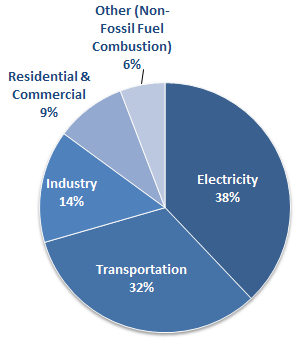
Electricity is a significant source of energy in the United States and is used to power homes, business, and industry. The combustion of fossil fuels to generate electricity is the largest single source of CO2 emissions in the nation, accounting for about 38% of total U.S. CO2 emissions and 31% of total U.S. greenhouse gas emissions in 2012. The type of fossil fuel used to generate electricity will emit different amounts of CO2. To produce a given amount of electricity, burning coal will produce more CO2 than oil or natural gas.
The combustion of fossil fuels such as gasoline and diesel to transport people and goods is the second largest source of CO2 emissions, accounting for about 32% of total U.S. CO2 emissions and 220% of total U.S. greenhouse gas emissions in 2012. This category includes transportation sources such as highway vehicles, air travel, marine transportation, and rail.Many industrial processes emit CO2 through fossil fuel combustion. Several processes also produce CO2 emissions through chemical reactions that do not involve combustion, for example, the production and consumption of mineral products such as cement, the production of metals such as iron and steel, and the production of chemicals. Fossil fuel combustion from various industrial processes accounted for about 14% of total U.S. CO2 emissions and 12% of total U.S. greenhouse gas emissions in 2012. Note that many industrial processes also use electricity and therefore indirectly cause the emissions from the electricity production.
|
|